University laboratories in Mexico are unique environments where both students and researchers work alongside each other, often sharing workstations and equipment. Selecting appropriate laboratory chairs is crucial to maintain productivity, comfort, and ergonomic standards for diverse users. B2B distributors, procurement managers, and laboratory furniture suppliers must understand the specific requirements of academic laboratories when recommending seating solutions. Choosing the right chair not only supports student learning and research efficiency but also ensures long-term durability and cost-effectiveness across multiple laboratory settings.
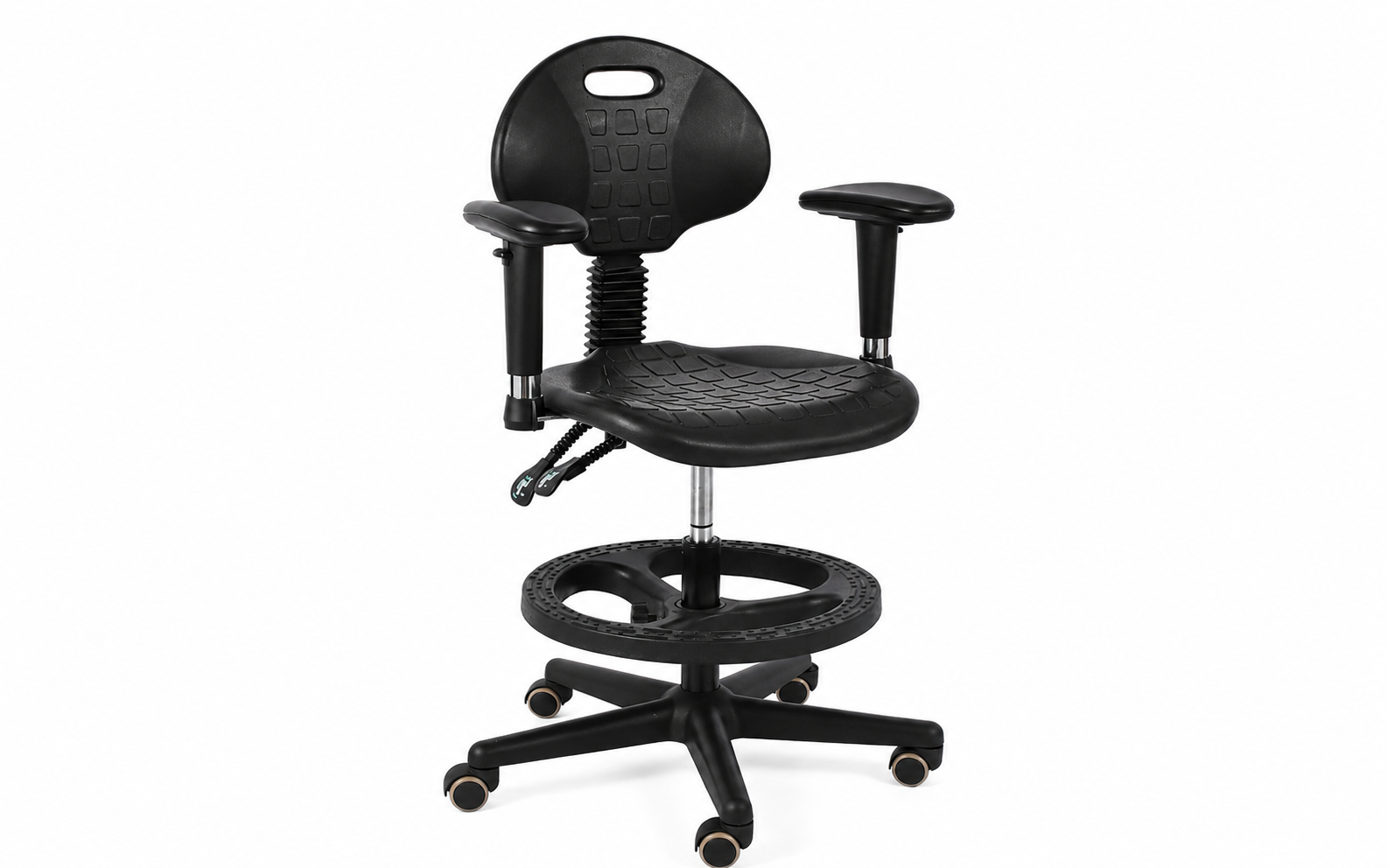
Material selection and durability are primary considerations in educational laboratory environments. University laboratories experience high usage, with students rotating through classes and researchers conducting long-term projects. An industrial polyurethane with chrome foot ring and casters adjustable laboratory chair provides a durable solution capable of withstanding frequent cleaning, chemical exposure, and extended daily use. Polyurethane surfaces are resistant to wear and contamination, while the chrome foot ring supports proper posture during prolonged laboratory tasks. Casters facilitate easy mobility, enabling users to transition between workstations efficiently, which is particularly important in dynamic university laboratory layouts.
Ergonomics and user adaptability are equally critical. Students and researchers vary in height, posture needs, and seating preferences. Adjustable laboratory chairs allow for height customization, proper lumbar support, and foot positioning, ensuring that all users maintain optimal posture. The industrial polyurethane with chrome foot ring and casters adjustable laboratory chair accommodates these variations, reducing fatigue and promoting concentration during experiments and laboratory exercises. B2B suppliers can highlight these ergonomic advantages when presenting solutions to academic institutions, demonstrating the chair’s ability to enhance comfort and performance for diverse user groups.
Operational workflow and space utilization also influence chair selection. University laboratories often require flexible seating arrangements to accommodate multiple students per workstation and specialized equipment for researchers. Chairs with swivel functions, smooth-rolling casters, and stable bases help maintain workflow efficiency while allowing seamless collaboration. The industrial polyurethane with chrome foot ring and casters adjustable laboratory chair supports these needs by combining stability with mobility, allowing laboratories to optimize space without compromising comfort or safety. Procurement teams should evaluate chair dimensions, weight capacity, and adaptability to ensure that furniture integrates effectively with laboratory layouts and classroom schedules.
Finally, long-term value and maintenance considerations are essential for universities managing multiple laboratories. High-quality chairs reduce replacement frequency, lower maintenance costs, and maintain hygiene standards. Customizable features and modular designs allow institutions to adapt chairs to evolving needs over time. By investing in industrial polyurethane with chrome foot ring and casters adjustable laboratory chairs, universities can achieve a balance of durability, ergonomic performance, and operational flexibility. B2B distributors and furniture suppliers can leverage these advantages to position themselves as strategic partners, providing seating solutions that enhance educational outcomes, support research productivity, and deliver sustainable value across Mexico’s academic laboratory market.