Large research projects in Mexico demand meticulous planning, resource allocation, and the integration of specialized laboratory equipment. Among these considerations, selecting appropriate laboratory seating is often underestimated, yet it plays a pivotal role in supporting personnel efficiency, comfort, and safety. Laboratory chairs must meet rigorous operational standards while accommodating extended work periods, high usage, and diverse laboratory layouts. B2B distributors, procurement managers, and laboratory furniture suppliers serving Mexico’s research sector must be aware of the factors that influence purchasing decisions for large-scale projects, ensuring that seating investments yield maximum value and operational performance.
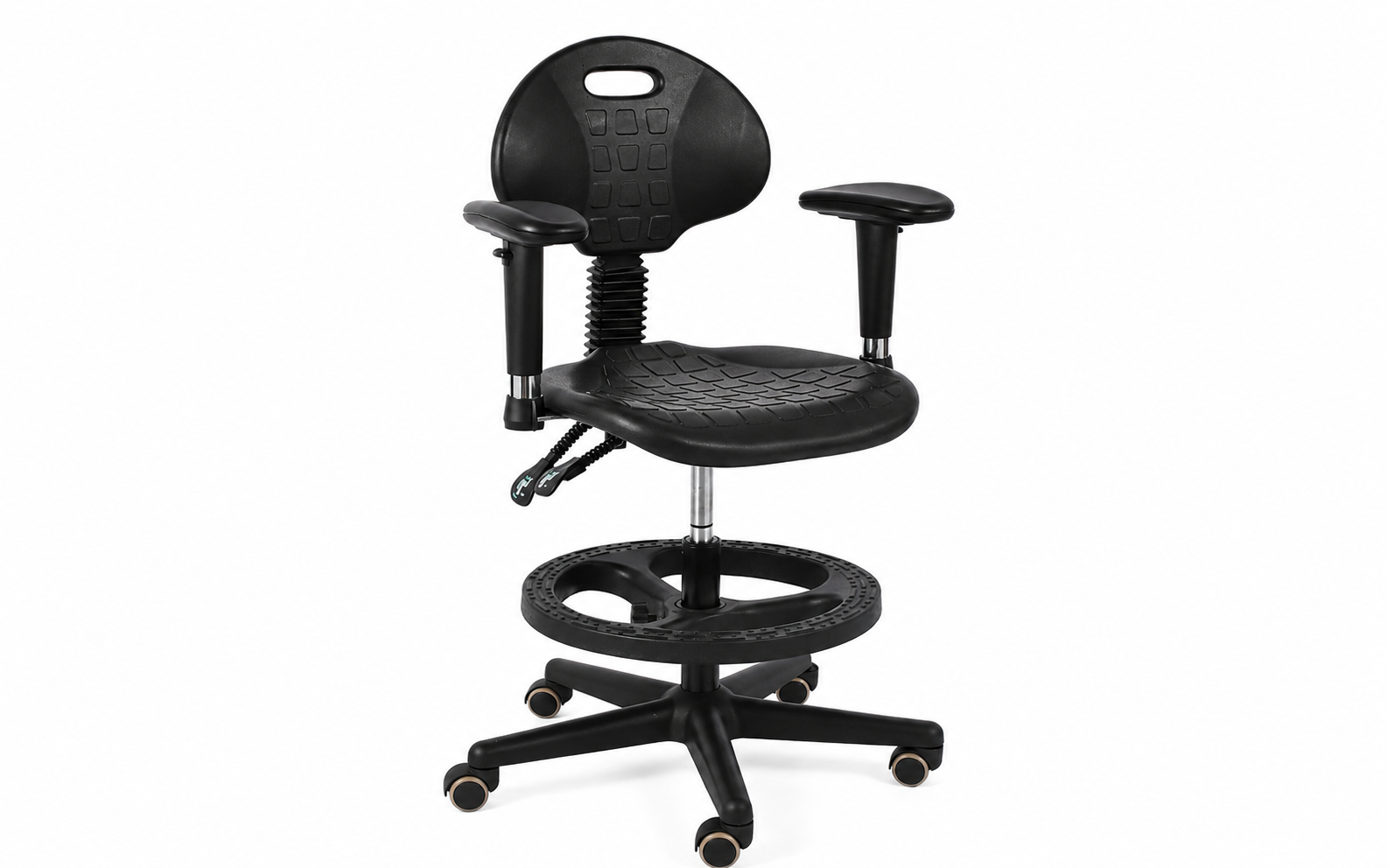
Durability is a primary factor when evaluating laboratory chairs for extensive research projects. High-usage environments subject chairs to frequent movement, chemical exposure, and cleaning routines, which can degrade inferior furniture quickly. An industrial polyurethane with chrome foot ring and casters adjustable laboratory chair provides a durable solution, with polyurethane surfaces resistant to chemicals, moisture, and abrasions. The chrome foot ring ensures ergonomic support at elevated workstations, and casters facilitate smooth mobility between stations. By prioritizing durability, laboratories reduce maintenance costs and replacement frequency, creating long-term value and consistent performance across research teams.
Ergonomic design is equally critical for laboratories engaged in prolonged or precision-intensive work. Laboratory staff often perform repetitive tasks that require sustained focus, and poorly designed seating can lead to fatigue, posture-related discomfort, and decreased productivity. The industrial polyurethane with chrome foot ring and casters adjustable laboratory chair offers adjustable height, lumbar support, and ergonomic foot placement through its chrome foot ring, supporting proper posture and minimizing physical strain. B2B distributors can highlight these ergonomic features when marketing chairs to laboratories seeking to enhance worker comfort, efficiency, and adherence to occupational safety standards.
Operational workflow considerations also influence chair selection for large research projects. Laboratories frequently have varying workstation heights, equipment arrangements, and mobility requirements. Chairs that support smooth transitions between workstations, provide stability, and maintain hygiene standards contribute to more efficient workflows. The industrial polyurethane with chrome foot ring and casters adjustable laboratory chair addresses these needs by combining mobility, stability, and easy-to-clean surfaces. Procurement teams should assess how seating integrates with laboratory layouts, equipment accessibility, and team coordination, ensuring that the selected chairs enhance operational efficiency without introducing safety risks or workflow disruptions.
Finally, total cost of ownership and long-term value are essential factors for B2B buyers managing large research projects. Beyond initial purchase price, laboratories must consider lifecycle costs, maintenance requirements, and potential downtime caused by chair failures. Choosing chairs that balance durability, ergonomics, and operational flexibility, such as the industrial polyurethane with chrome foot ring and casters adjustable laboratory chair, ensures sustainable investment returns. Suppliers and distributors can provide additional value by offering modular designs, maintenance support, and bulk procurement options, positioning themselves as strategic partners for laboratories conducting high-scale scientific, industrial, or medical research in Mexico.