Polyurethane is widely used in various industrial applications, especially in seating solutions due to its balance of comfort, durability, and resistance. However, not all polyurethane is created equal. Knowing how to identify high-quality polyurethane can help businesses select products that offer longevity, safety, and value.
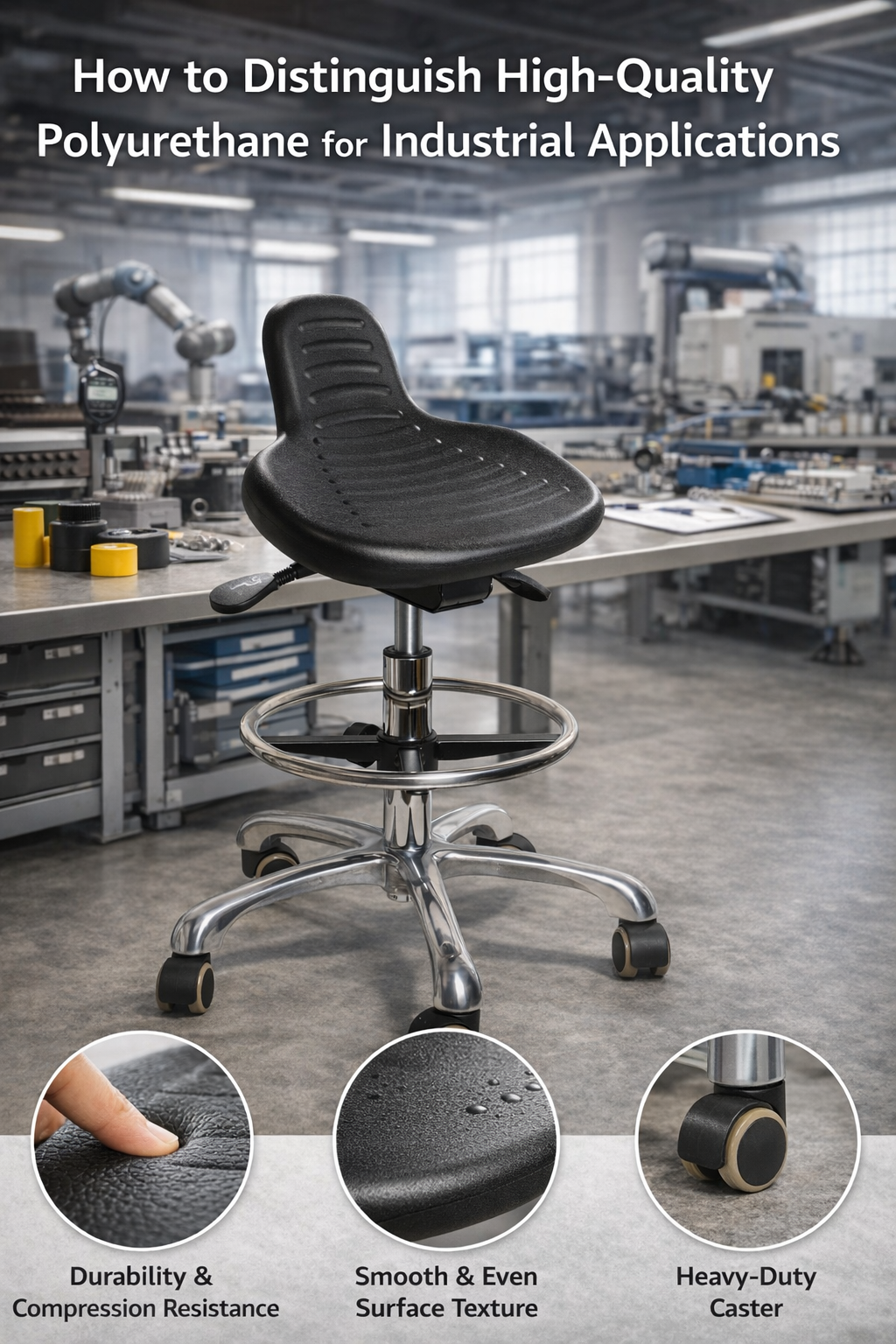
1. Check the Density and Firmness
One of the first indicators of polyurethane quality is its density. High-density polyurethane tends to offer better structural support, longer lifespan, and higher resistance to compression. Low-density variants, while cheaper, are more prone to sagging or deterioration over time.
Take, for example, the industrial polyurethane with chrome foot ring and casters adjustable laboratory chair. It features high-density polyurethane that retains its shape even after prolonged use, offering consistent ergonomic support in high-traffic environments such as laboratories or production floors.
2. Surface Finish and Uniformity
Quality polyurethane has a smooth, uniform surface free from bubbles, cracks, or uneven textures. A poor surface finish may indicate inconsistent chemical blending or poor molding processes. These flaws can compromise comfort and durability.
The industrial polyurethane with chrome foot ring and casters adjustable laboratory chair is engineered with precision-molded polyurethane surfaces. The result is a clean, polished finish that resists wear, liquids, and harsh cleaning agents, reflecting both material and manufacturing excellence.
3. Chemical Resistance and Maintenance
Another factor that distinguishes superior polyurethane is its resistance to chemicals, solvents, and cleaning solutions. In industrial and medical settings, surfaces are exposed to regular cleaning cycles, so the material must resist degradation.
Again, the industrial polyurethane with chrome foot ring and casters adjustable laboratory chair stands out. Its polyurethane components can withstand repeated exposure to disinfectants without cracking or fading, maintaining both hygiene and aesthetics.
4. Elastic Recovery and Flexibility
High-quality polyurethane quickly returns to its original shape after being compressed. Poor-quality foam may deform permanently, affecting both comfort and support. Flexibility also ensures that the material doesn't crack under stress.
When tested, polyurethane in top-grade chairs like the industrial polyurethane with chrome foot ring and casters adjustable laboratory chair shows excellent rebound and elasticity—ideal for dynamic seating environments where users shift positions frequently.