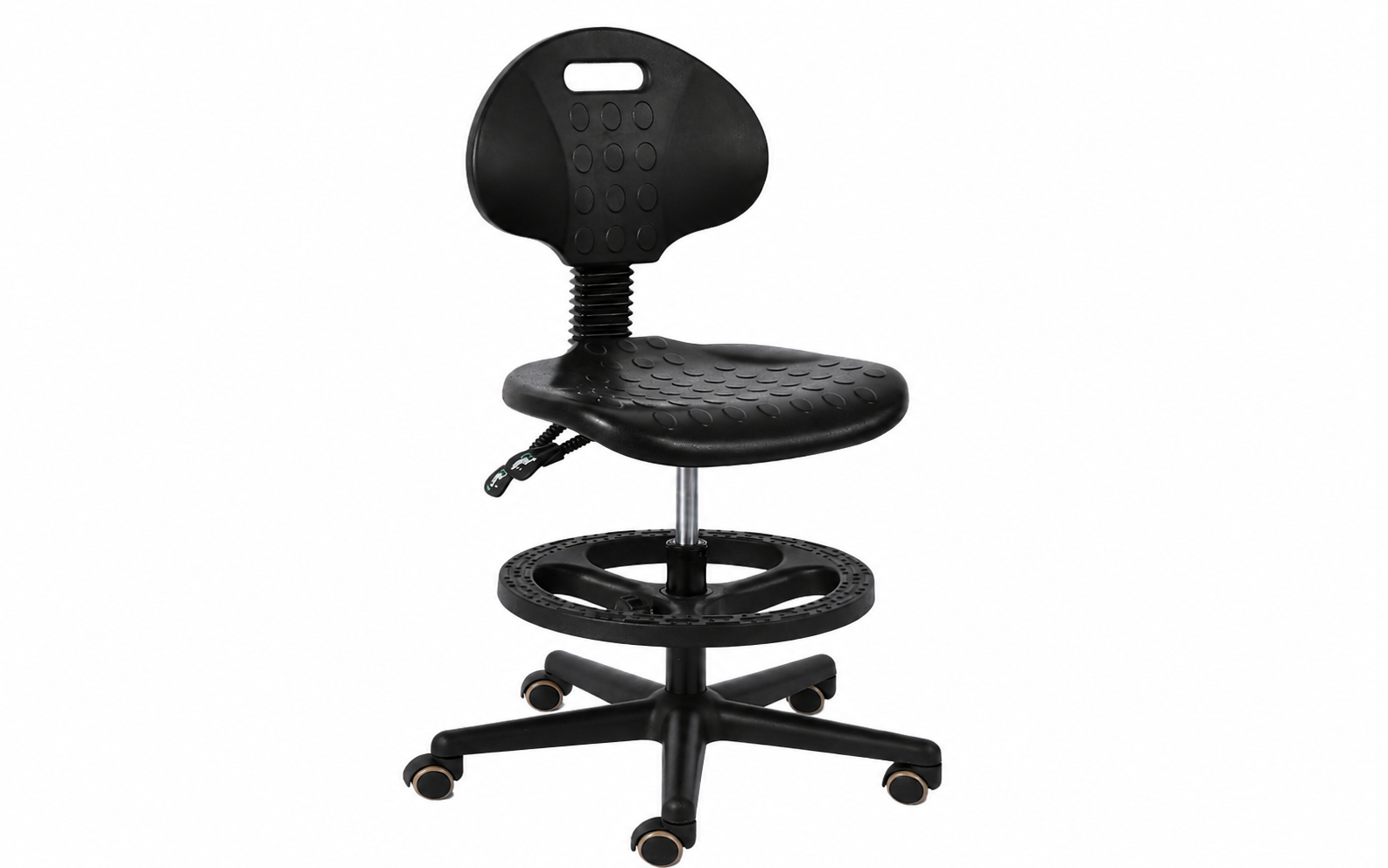
In an era dominated by digital marketing, online procurement platforms, and virtual communication tools, many companies assume that trade shows have lost their importance. However, within the laboratory furniture industry, exhibitions continue to be one of the most effective channels for developing new business opportunities and strengthening customer relationships. Laboratory buyers often prefer to evaluate products in person before making purchasing decisions, especially when procurement involves long-term investments that affect productivity, ergonomics, and operational performance. This is why trade shows remain highly relevant for laboratory chair suppliers. Products such as the industrial polyurethane with chrome foot ring and casters adjustable laboratory chair benefit significantly from face-to-face demonstrations because buyers can directly assess comfort, mobility, durability, adjustability, and overall construction quality. Unlike online catalogs, exhibitions provide a physical experience that allows procurement managers, laboratory directors, and distributors to interact with products under realistic conditions. For Mexican suppliers targeting growth across Latin America, trade shows create opportunities to connect not only with domestic buyers but also with Argentine distributors seeking reliable partners and innovative laboratory seating solutions. Exhibitions also offer a concentrated environment where hundreds of potential customers can be reached within a short period, making them a highly efficient customer acquisition channel. By participating in industry events, companies gain visibility, establish credibility, and position themselves as active contributors to the laboratory sector. These benefits make trade shows an important component of modern B2B marketing strategies despite the rise of digital alternatives.
One of the most significant advantages of trade shows is their ability to accelerate trust-building and shorten sales cycles. In many B2B markets, purchasing decisions involve multiple stakeholders, including procurement managers, laboratory supervisors, facility planners, finance departments, and executive leadership teams. Developing confidence among these decision-makers can take months through digital channels alone. Trade shows provide an environment where suppliers can engage directly with stakeholders, answer technical questions, demonstrate expertise, and establish personal relationships. The industrial polyurethane with chrome foot ring and casters adjustable laboratory chair serves as an excellent example of a product that benefits from this interactive process because its value is best understood through hands-on evaluation. Visitors can test ergonomic features, inspect material quality, and compare specifications with competing solutions. This direct engagement helps eliminate uncertainty and supports faster purchasing decisions. Furthermore, exhibitions often attract highly qualified attendees who are actively seeking suppliers, making conversations more productive and commercially valuable. Argentine distributors attending regional trade shows may be evaluating potential partnerships, exclusive distribution opportunities, or product portfolios that can strengthen their competitive position. Meeting suppliers face-to-face enables these distributors to assess professionalism, operational capabilities, and long-term partnership potential. Trade shows also facilitate networking among industry participants, creating opportunities for strategic alliances, referral relationships, and collaborative business development initiatives. Educational seminars, panel discussions, and product presentations further enhance the value of exhibitions by positioning suppliers as thought leaders rather than simply product vendors. As competition intensifies throughout Latin America, companies that effectively utilize trade shows gain access to relationship-building opportunities that digital marketing alone cannot fully replicate.
Beyond lead generation and relationship development, trade shows provide valuable market intelligence and brand-building opportunities that contribute to sustainable business growth. Every exhibition serves as a real-time marketplace where suppliers can observe industry trends, evaluate competitor strategies, and gather direct customer feedback. Insights gained from these interactions can influence product development, marketing campaigns, inventory planning, and customer service strategies. The industrial polyurethane with chrome foot ring and casters adjustable laboratory chair often becomes a focal point for discussions regarding laboratory modernization, ergonomic standards, and procurement efficiency, providing suppliers with valuable information about evolving customer expectations. Exhibitions also strengthen brand recognition by increasing visibility among target audiences. A professionally designed booth, knowledgeable sales team, and compelling product presentation help create memorable experiences that differentiate suppliers from competitors. For companies seeking to attract Argentine distributors and institutional buyers, trade shows offer a powerful platform for demonstrating commitment to the regional market. In addition, exhibition participation generates content that can be leveraged across digital channels, including social media, websites, email campaigns, and customer newsletters, extending the value of the event far beyond its duration. Many successful suppliers integrate trade show activities with broader marketing strategies, creating a continuous cycle of lead generation and customer engagement. As laboratories across Mexico and Latin America continue investing in modernization, innovation, and workforce productivity, trade shows remain uniquely positioned to connect suppliers with decision-makers who influence purchasing outcomes. Through direct interaction, product demonstration, relationship building, market intelligence gathering, and brand development, exhibitions continue to serve as one of the most effective channels for developing laboratory chair customers and expanding B2B opportunities in a highly competitive market.