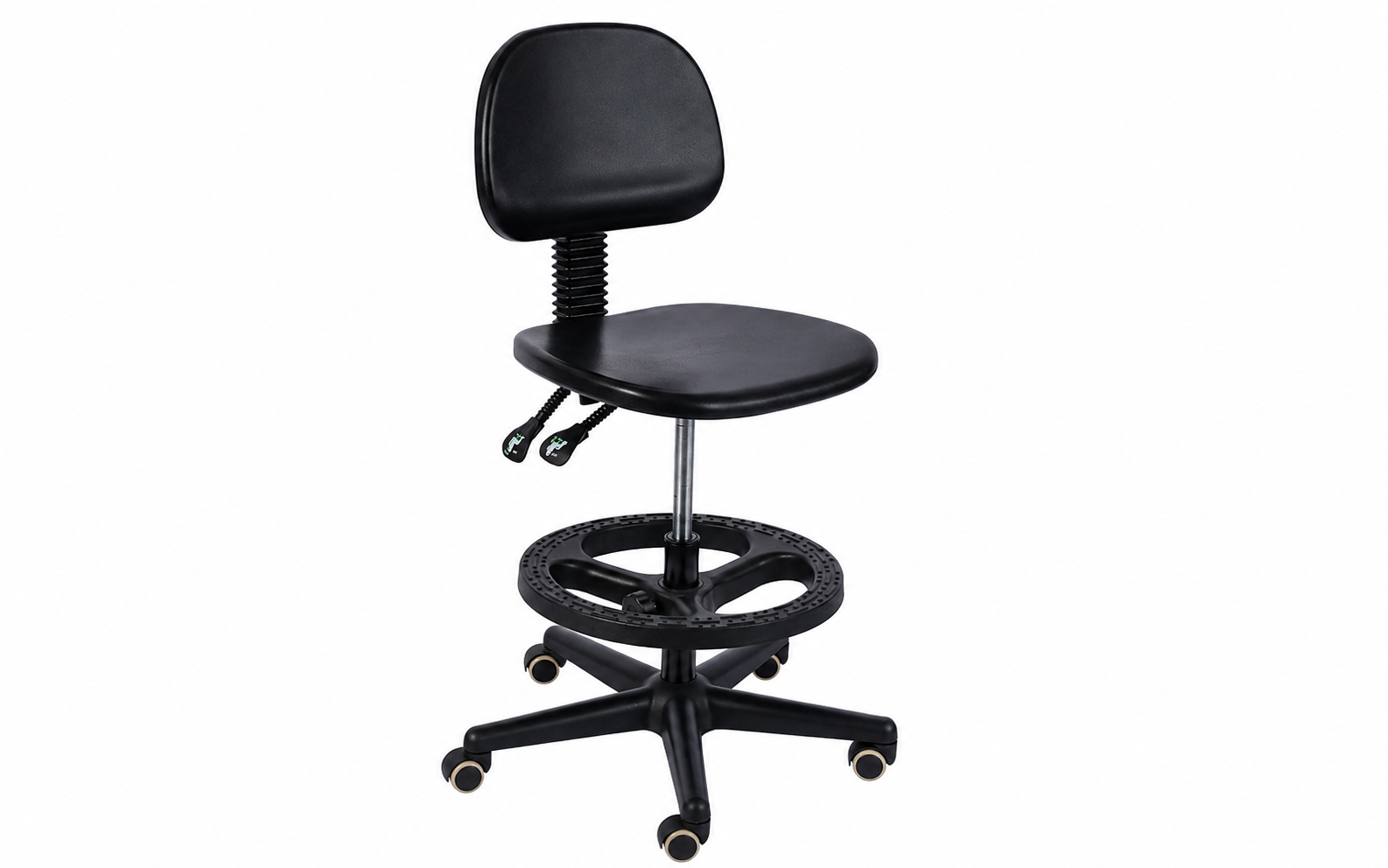
In Mexico, laboratories in sectors such as healthcare, pharmaceuticals, research institutions, universities, and industrial testing facilities face growing challenges due to unpredictable fluctuations in the demand for laboratory chairs. Managing these fluctuations effectively requires supply chains that are agile, responsive, and resilient. One of the most effective strategies is to diversify the supplier base. By collaborating with multiple manufacturers and distributors, companies reduce dependency on single sources, ensuring that high-demand products such as the industrial polyurethane with chrome foot ring and casters adjustable laboratory chair remain available even during peak periods. Supplier diversification also allows organizations to negotiate more favorable terms, secure priority production slots, and mitigate risks associated with logistical disruptions or raw material shortages. B2B procurement strategies focused on supplier collaboration, flexible order scheduling, and contingency planning further enhance the ability of Mexican laboratories to maintain continuous operations while adapting to changing market demands.
Inventory management and predictive analytics are critical components for enhancing supply chain flexibility. Laboratories often face challenges in balancing stock availability with operational budgets, leading to shortages or excess inventory. Implementing predictive models that analyze historical consumption data, seasonal variations, and upcoming project requirements allows procurement teams to forecast demand more accurately and prepare inventory accordingly. Standardizing core products, such as the industrial polyurethane with chrome foot ring and casters adjustable laboratory chair, simplifies inventory planning by ensuring a consistent product portfolio across multiple locations. Digital inventory management systems enable real-time tracking of stock levels, order status, and supplier performance, supporting rapid decision-making and minimizing lead times. Additionally, by integrating inventory insights with procurement workflows, laboratories can implement automated replenishment protocols, reducing administrative overhead and improving overall operational efficiency.
Technology adoption and cross-functional coordination play an essential role in sustaining a flexible laboratory chair supply chain. Digital procurement platforms, enterprise resource planning (ERP) systems, and supplier portals facilitate seamless communication between procurement, logistics, and operations teams. These platforms allow for scenario planning, real-time order tracking, and data-driven adjustments in response to sudden demand shifts. The industrial polyurethane with chrome foot ring and casters adjustable laboratory chair benefits from such technology-driven supply chains, as its standardized specifications make it easier to deploy across multiple facilities efficiently. Additionally, integrating logistics strategies such as regional distribution hubs, flexible shipping arrangements, and contingency transport solutions ensures that products reach laboratories promptly regardless of sudden spikes in demand. By combining supplier diversification, predictive analytics, standardized product offerings, and technology-enabled operational coordination, companies in Mexico can create laboratory chair supply chains that are agile, resilient, and capable of adapting to demand fluctuations, thereby maintaining operational continuity and fostering stronger B2B relationships.